
Week 602 · Istanbul, Turkey
Istanbul,
I hadn't been to Istanbul since 2002 — a lot of business trips from 2000 to 2002 — and we had done a short family trip to Ephesus. The city has changed enormously. Population doubled to 16 million. Much cleaner. The vendors not nearly as aggressive. Much more enjoyable walking around.
We had two stops in Turkey — a short stop in Ephesus and we finished up the cruise in Istanbul, tacking on another full day. Istanbul has changed a lot in 20-plus years: population doubled to 16 million, politically less aligned with the US and EU, less secular, and a step change in infrastructure. Much cleaner and the vendors not as aggressive in pulling you into stores. Much more enjoyable to walk around.

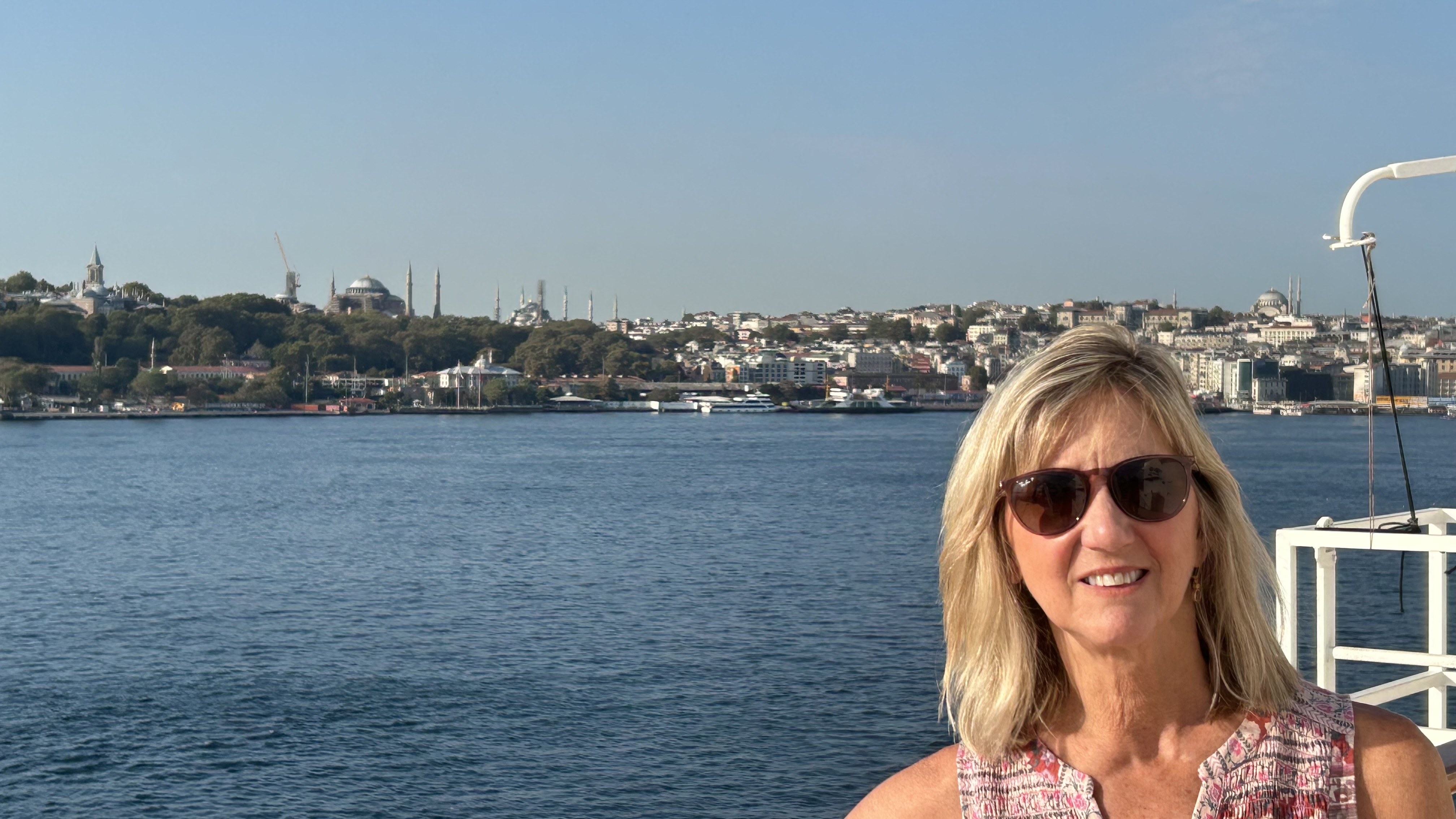
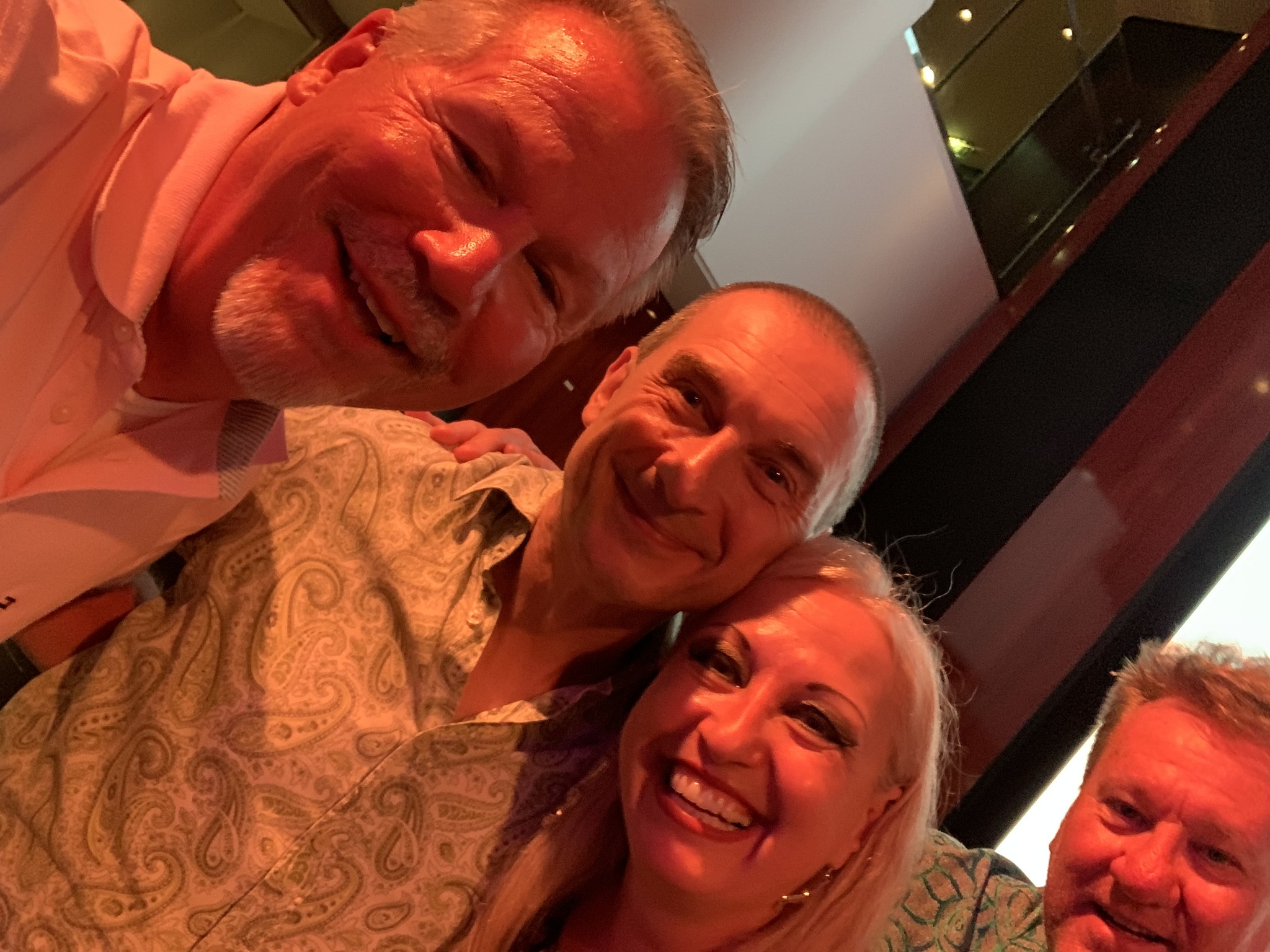
Istanbul is the only city in the world that spans two continents — Europe and Asia — divided by the Bosphorus Strait. Known as Byzantium, then Constantinople, it served as the capital of the Byzantine Empire for over a thousand years before falling to the Ottomans in 1453. It remained the Ottoman capital until the empire's dissolution after World War I.
First day was full-on tourist — the Blue Mosque, Hagia Sofia, Topkapi Palace, and a Bosphorus cruise. We started with the Blue Mosque: free entry, all we had to do was wear some covering that was given to everyone at the door. Very serene and peaceful. Built in the early 1600s, it's about 400 years old — which sounds old until you walk across the square to Hagia Sofia and realise it's 1,100 years older.

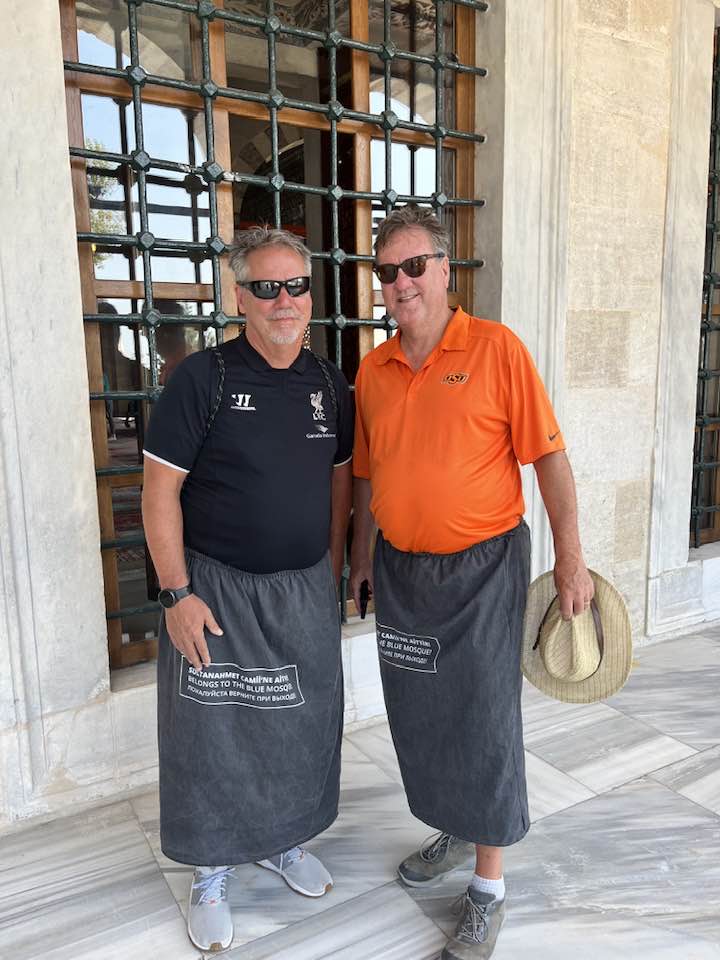
Proper coverage required before entering the mosque — coverings provided at the door for everyone. Free entry, no queuing, no confusion. Everything the Hagia Sofia visit across the square was not.


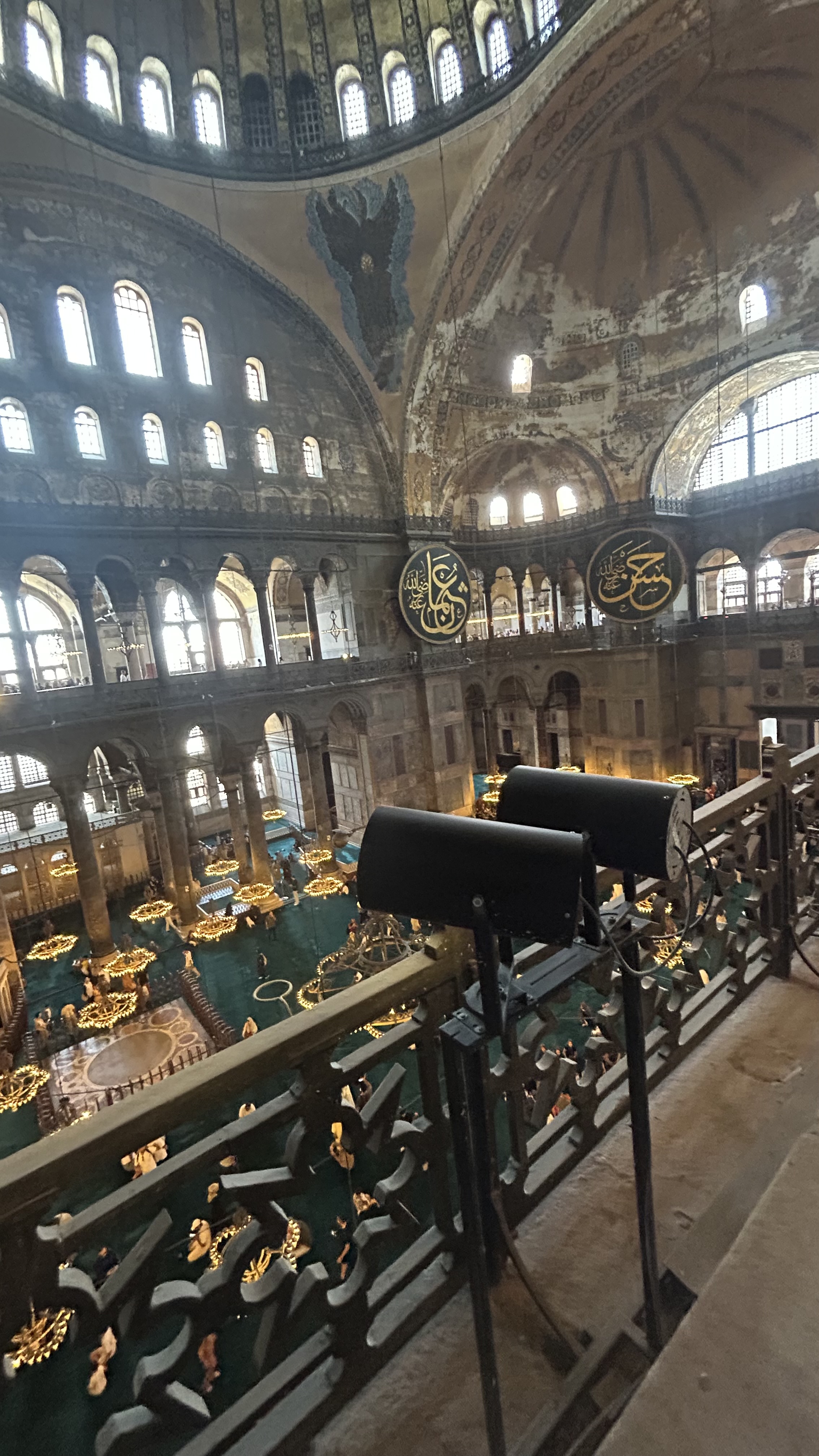
We then walked across Sultanahmet Square to Hagia Sofia — which was not serene and peaceful. Confusion on ticket purchase, which line to stand in, whether we needed to cover up. In all it took about an hour to get in. Worth it. Hagia Sofia originally served as a Christian cathedral for the Byzantine Empire, built around 500 AD — making it roughly 1,500 years old. It was converted to a mosque after the Ottoman conquest in 1453, then to a museum in the 1930s, then back to a mosque in 2020.

"Hagia Sofia is impressive as it is 1,100 years older than the Blue Mosque — which is itself 400 years old. Standing inside it, that math becomes difficult to process."


We spent the afternoon at Topkapi Palace — the home of the Sultans of the Ottoman Empire. Much more impressive than I remembered from 2001. Perhaps my memory is focused on the fact that we lost Alexandra for a while during that visit. Several generations of Ottoman Sultans lived here, each building new sections more elaborate than the last. It was converted to a museum shortly after World War I and the fall of the Ottoman Empire. We tried to find the restaurant but it seems to have been closed and renovated.

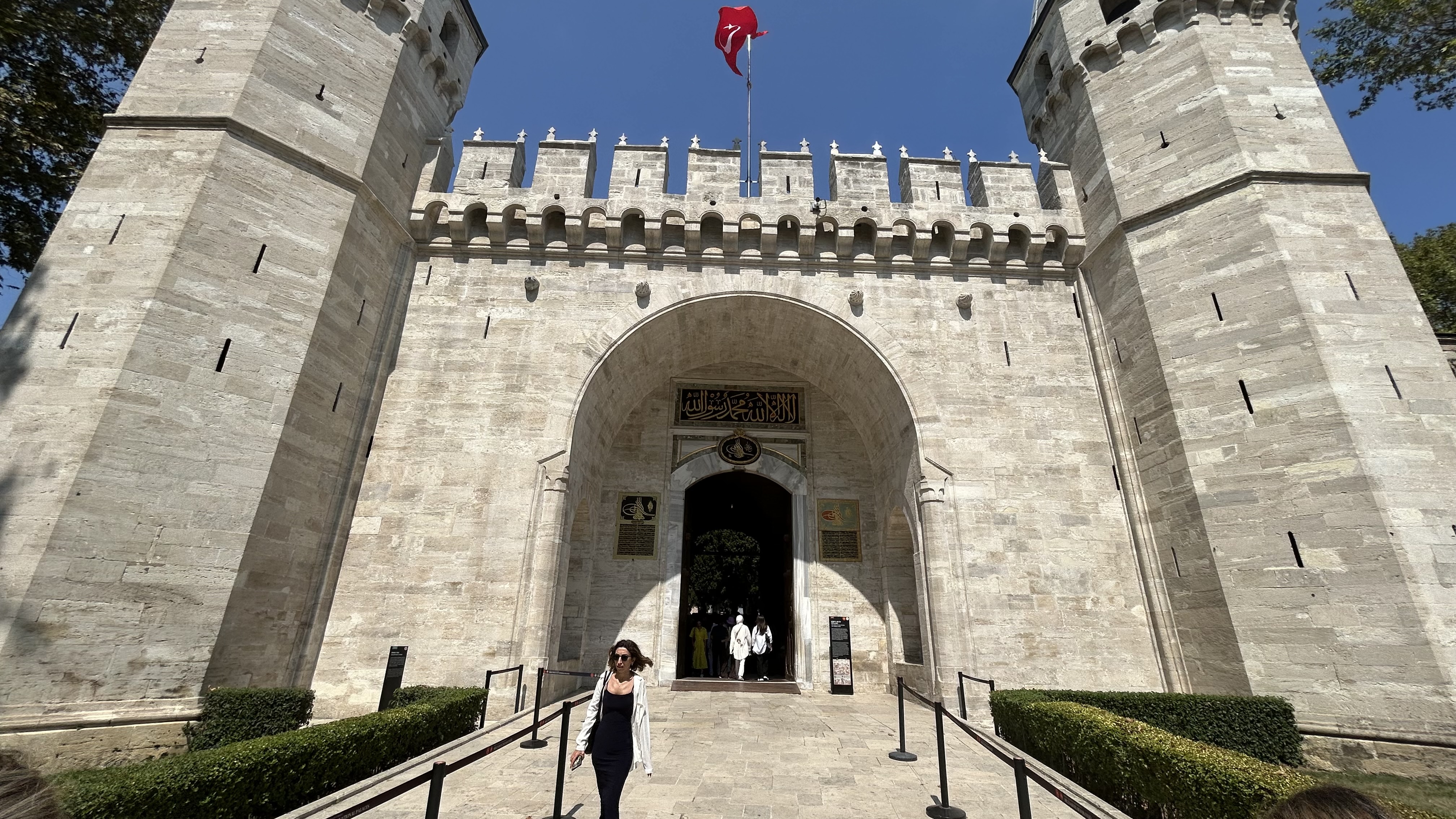

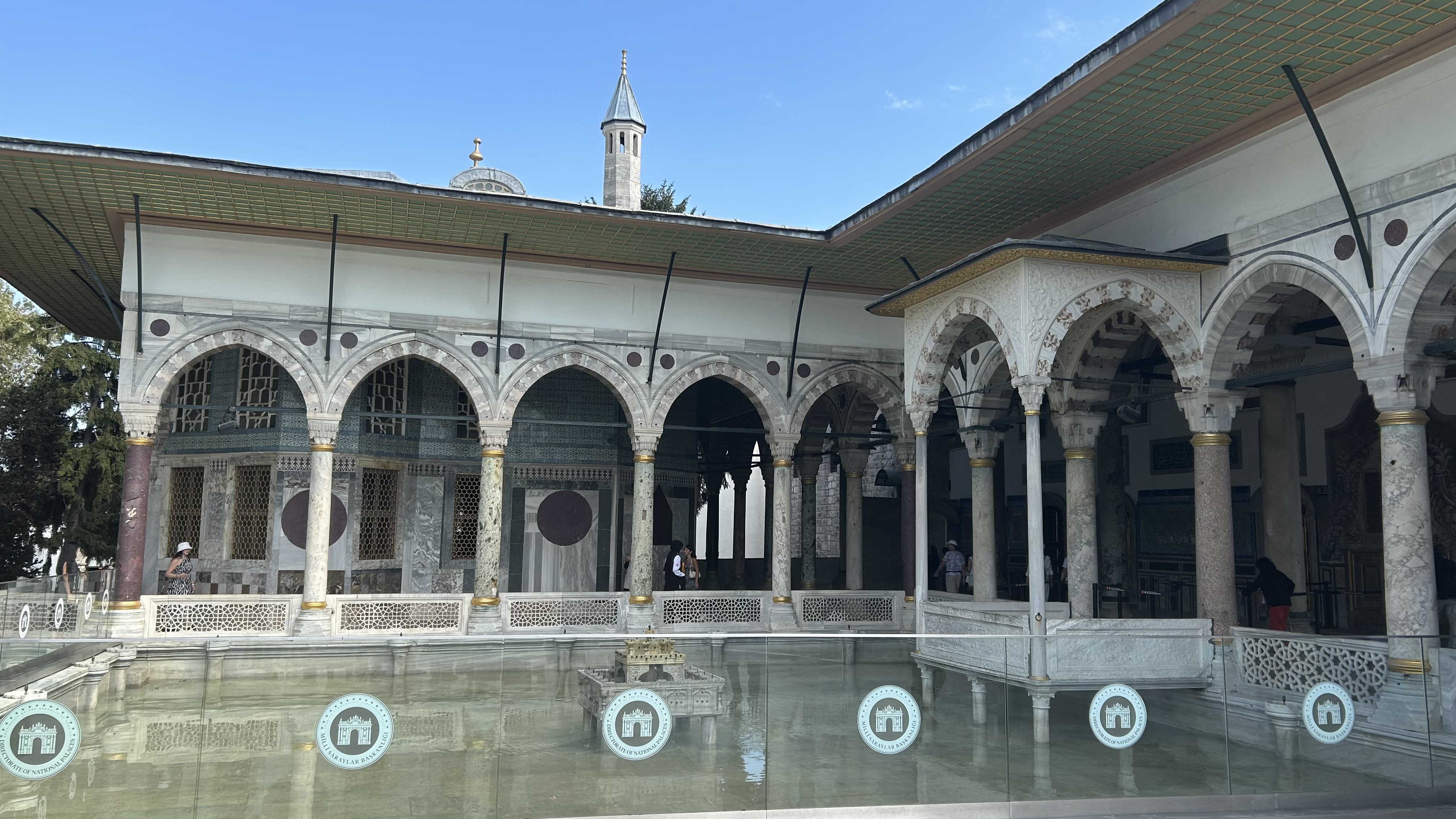


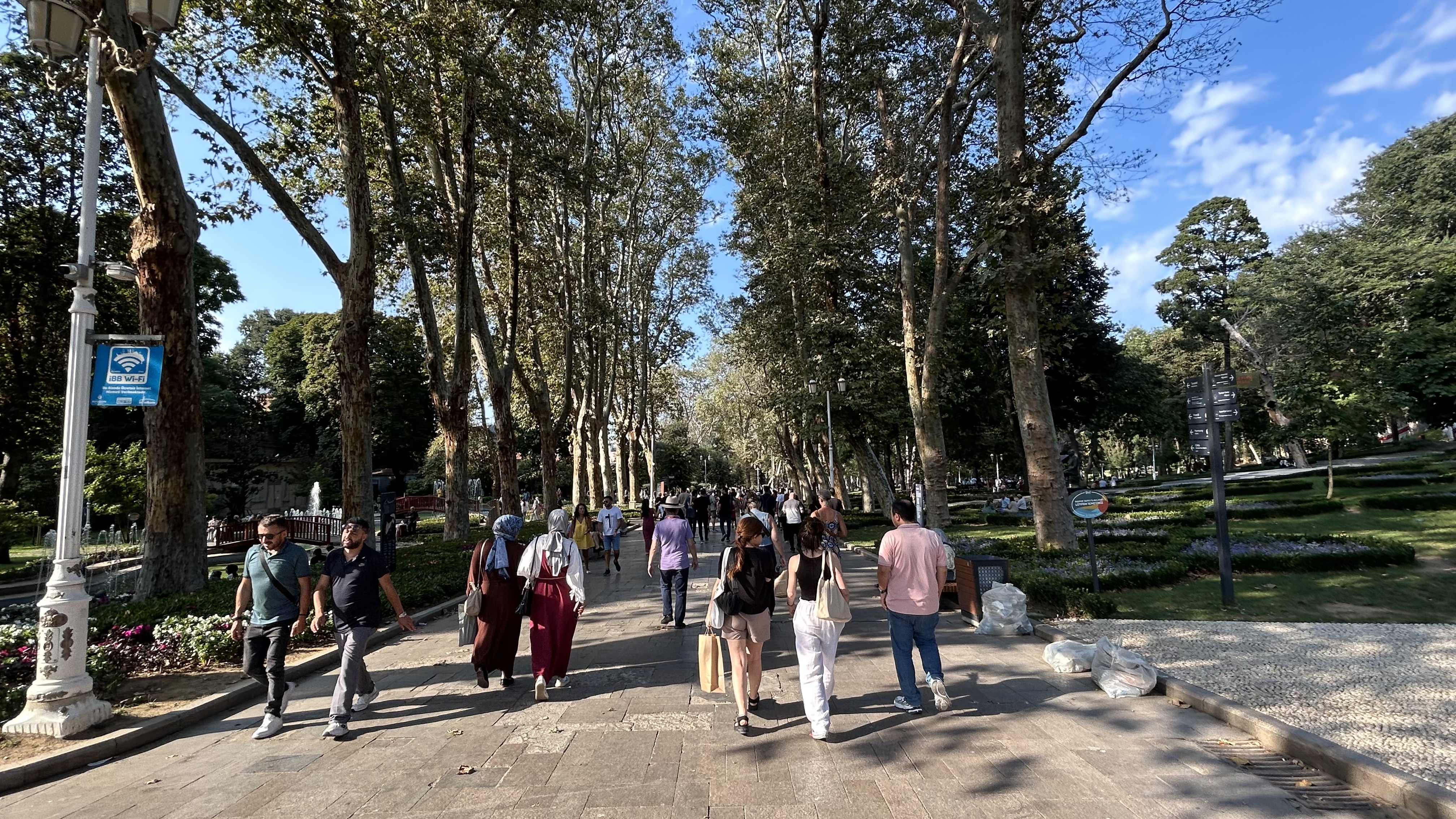
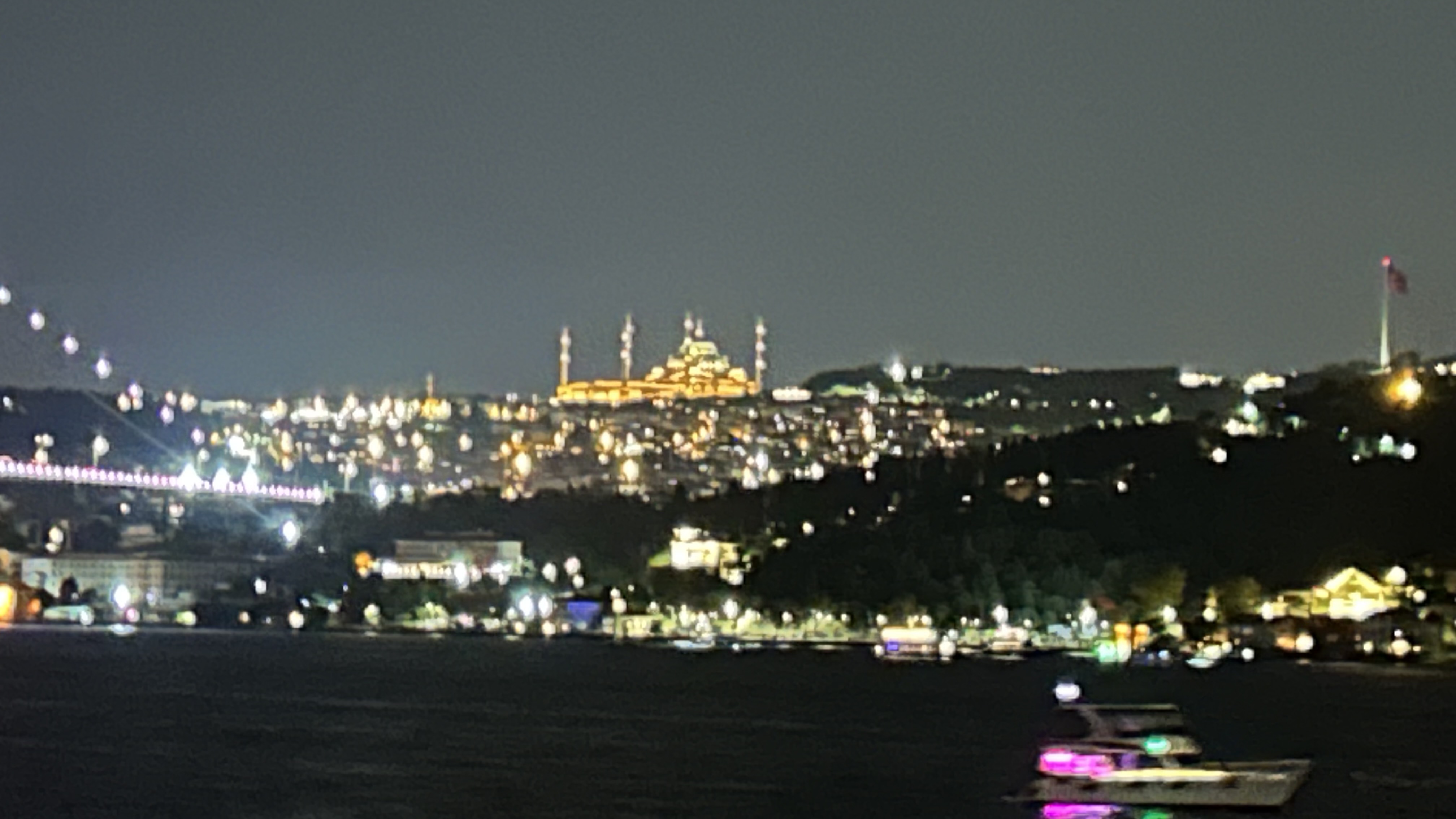
Istanbul · August 2025 · The divide between Europe and Asia
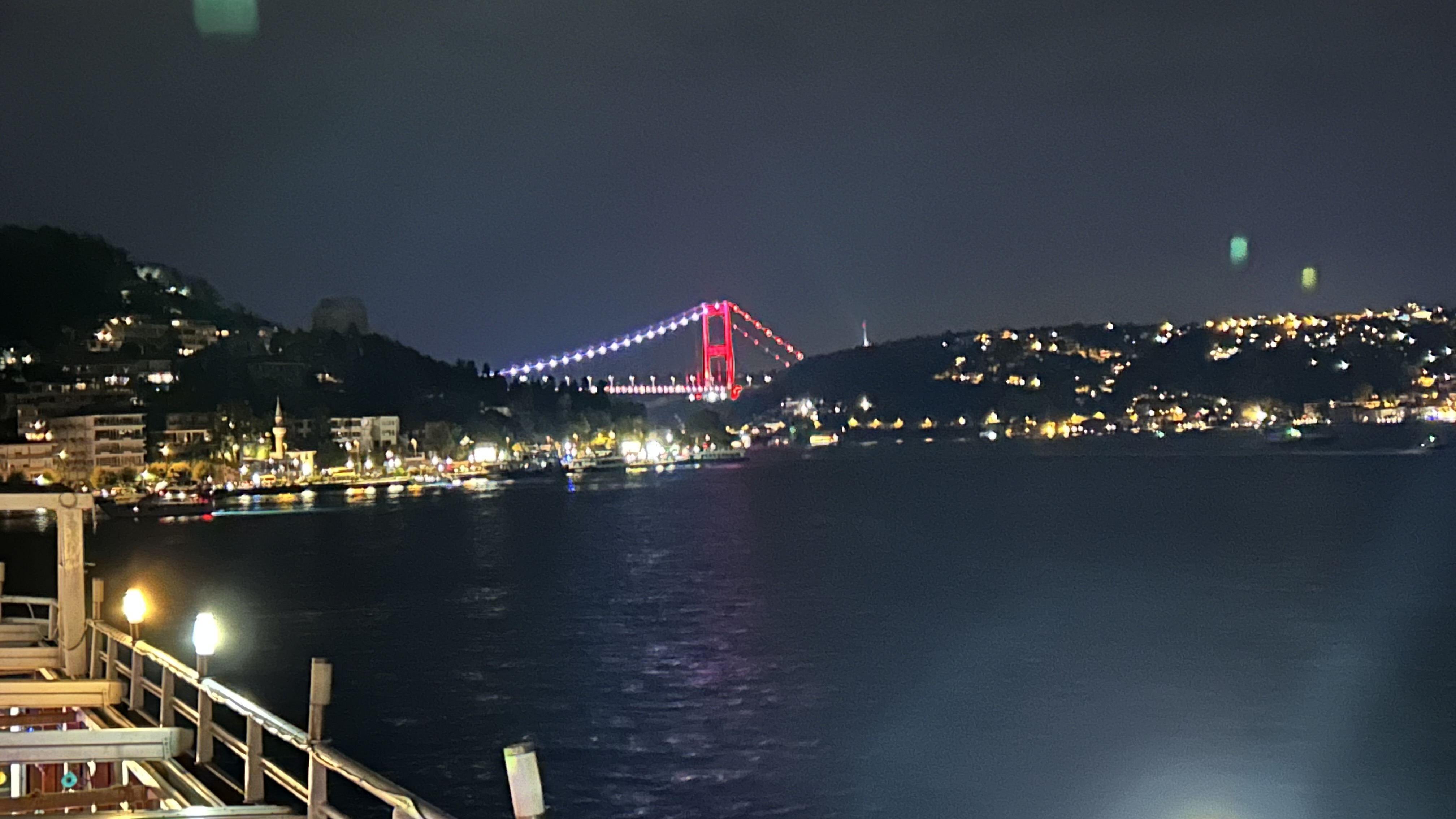
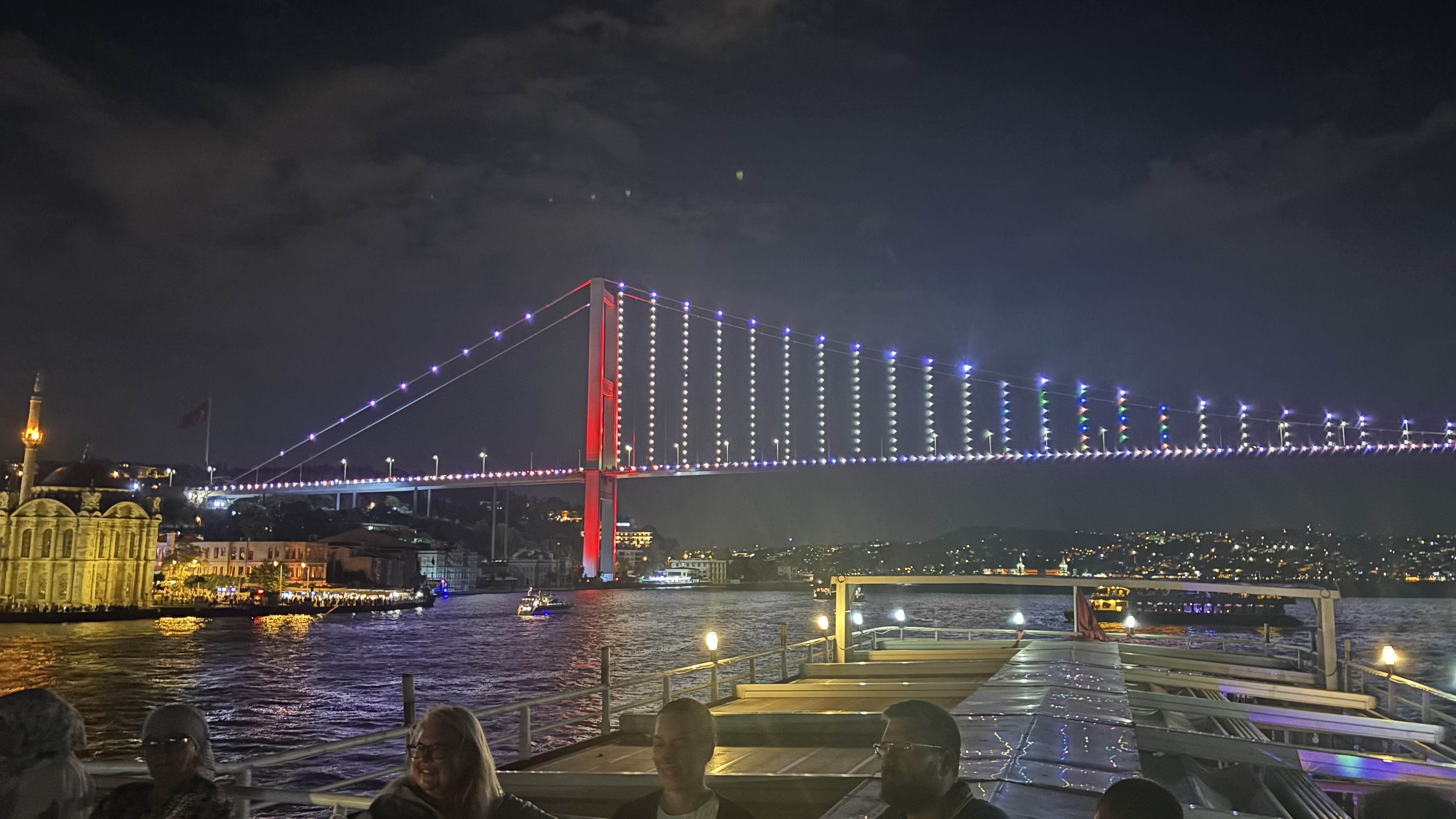
After a long day, we finished with a drink on the rooftop bar at the Conrad and then headed to the Bosphorus Cruise. The cruise started off wholesome — lots of families, flags placed at the tables for the countries of the people on the boat. For about 20 countries they played folk music and the people would dance. Only the USA didn't get called — there were two other USA tables — and we never confirmed why. Then the belly dancer arrived, which was probably not what the families expected. She was very aggressive about tips and targeted Terry. Terry was able to keep his money in his pocket. She skipped me and went straight to Sharon.



Our last day we went to the Basilica Cistern and the Galata Tower — we had been to neither on prior visits. The Basilica Cistern was prominently featured in Dan Brown's novel Inferno and is pretty impressive and worth a visit. Just don't confuse the signs for the other cisterns in the area, as I did. The Galata Tower is centrally located and worth a look if you're in the neighbourhood. We skipped the Bazaar — when checking what attractions were open I didn't check the Bazaar, and it was closed on Sunday. But we found a porcelain shop operated by the son of the artist, bought a vase, and it was shipped and delivered within a couple of days of our return home.

The Galata Tower — built in 1348 by the Genoese colony in Constantinople, it dominated the skyline of the medieval city. Now in the middle of a lively neighbourhood on the European side, surrounded by restaurants and shops on every level of the hill below it.


Great trip back and hoping to return to Turkey again. Istanbul rewards repeat visits — you can't do all of it in two days and there's always something that gets missed or seen differently the second time around.